
The Fund
Most alternative investments, whether in private equity, private credit, real assets, or other specialized strategies, are structured through a fund. For this reason, private market investments are often referred to as indirect investments.
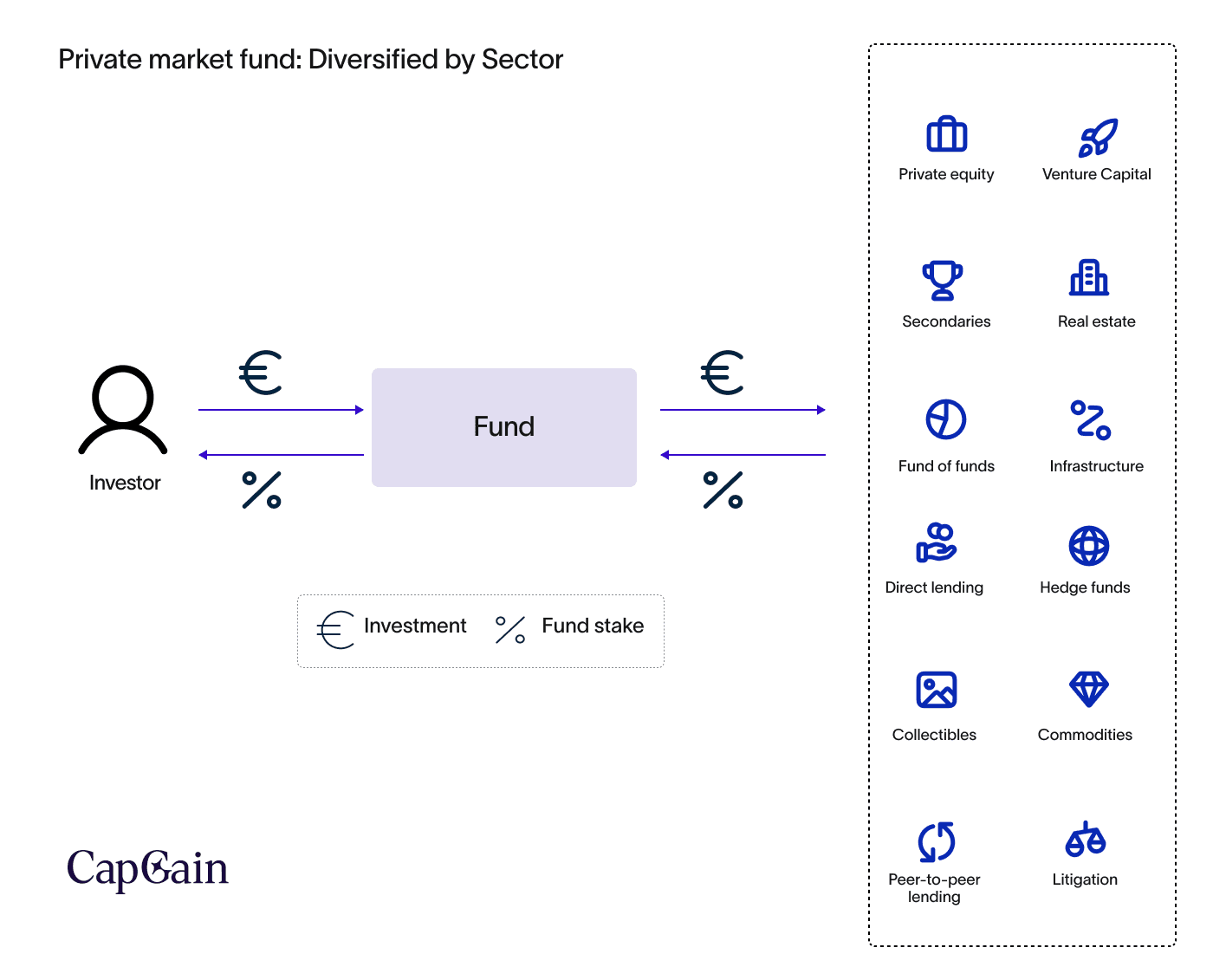
There are four major components to a fund. Understanding these is central to your comprehension of private market investing, for which reason we will revert to it a couple of times throughout this course:
· Limited Partner (LP): Starting with where the money comes from, the limited partners, also known as the investors. As a limited partner, you commit capital to a fund along with other investors. Limited Partners are not involved in the fund's day-to-day management and, consequently, have limited liability.
· The Fund: This is the investment vehicle that pools money from all the investors (LPs). It is established as a limited partnership for the sole purpose of investing in private enterprises or assets. The overall goal of a private fund is almost always to realize appreciation in the pool of private assets acquired within a typical time frame of 10-12 years.
· The Manager (General Partner or GP): This entity initiates and administers the fund, selects and manages investments, collects funds from investors, and distributes proceeds back to investors when investments are sold. The manager assumes significant responsibility for managing the fund's assets and operations. They are the active managers of the fund, and their roles span all aspects of the investments, from screening and sourcing to exit.
· Assets: These are the private assets in which the fund invests. Assets can be a share in a company, a loan agreement, or niche investments such as litigation, collectibles, or other real assets. We'll dive more into these diverse investment strategies in later modules dedicated to specific alternative asset classes.
Limited Partnerships
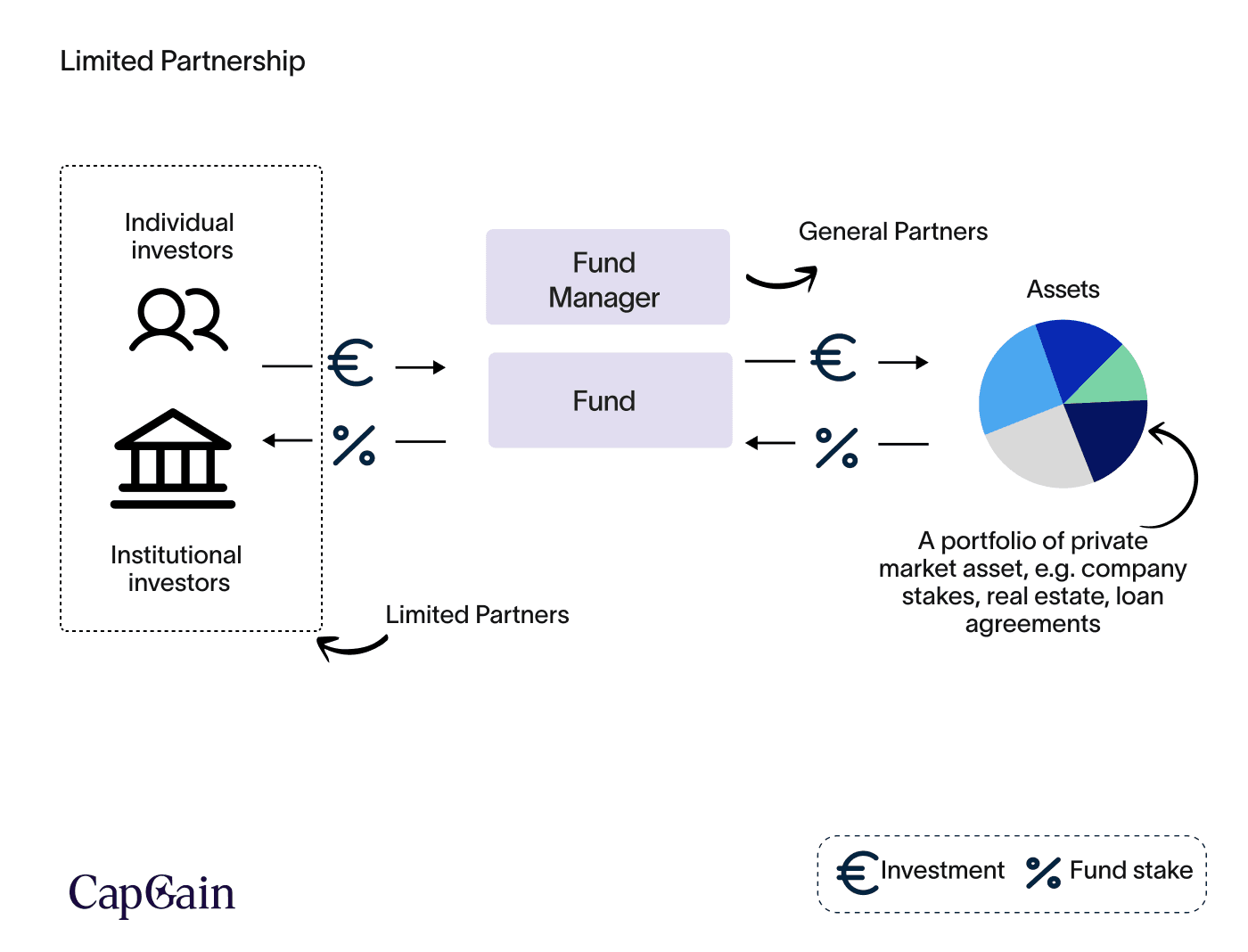
This limited partnership structure offers several significant benefits, including pass-through taxation, where the partnership's income is taxed only at the individual investor level, thereby avoiding corporate double taxation. Profits from the sale of investments are typically treated as capital gains, which are often taxed at a lower rate than ordinary income.
Another positive aspect of fund investments is that fund investments are diversified by design: When you invest through a fund, you don’t invest in a single asset. Instead, you invest in a fund that, in turn, invests in a number of carefully selected assets.
The best way to understand how fund diversification works in practice, is by examining private market funds.
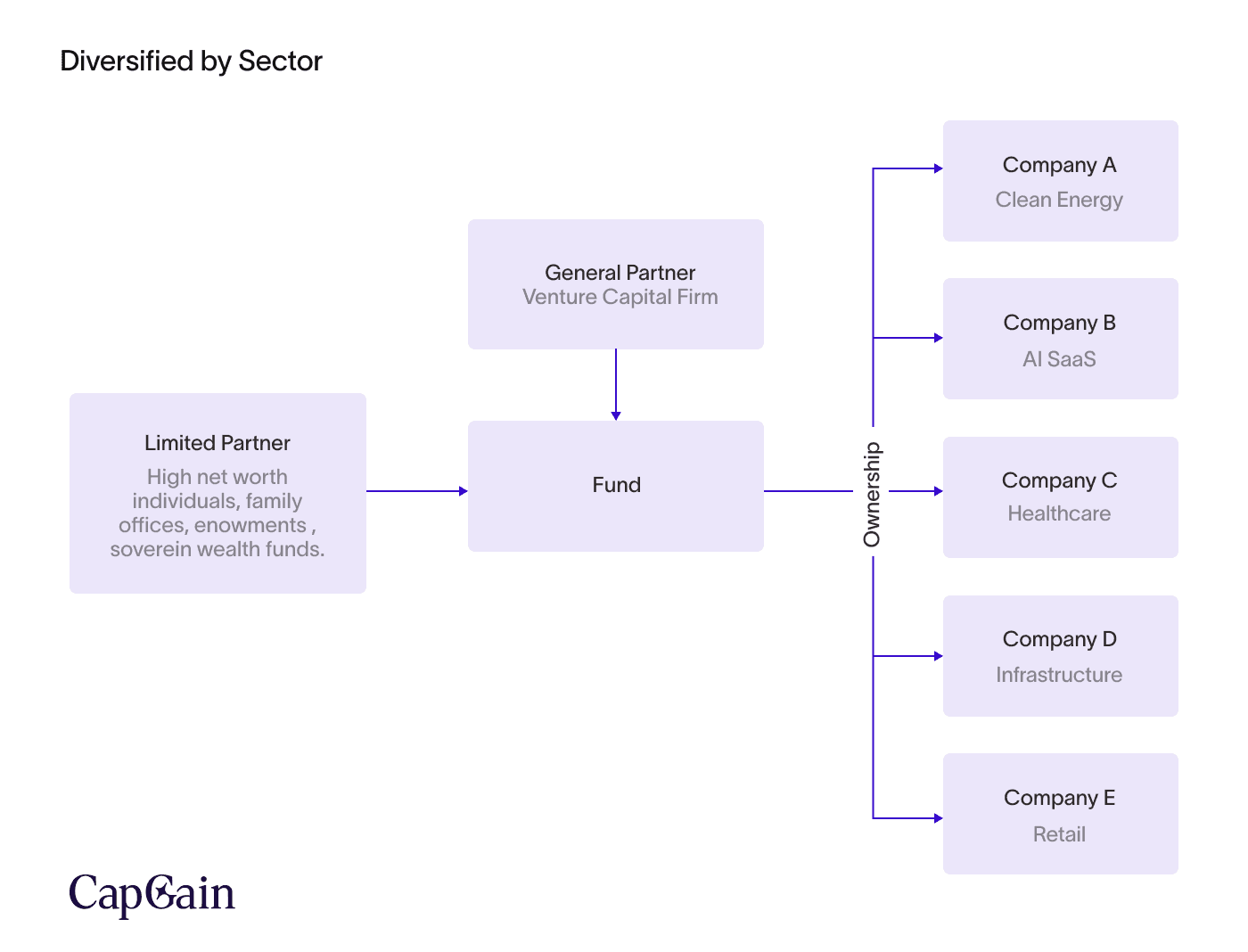
In private equity, each fund follows its own investment strategy — some specialize in scaling tech startups, others acquire mature businesses for turnaround, and some diversify broadly across geographies or sectors. One fund might invest in a range of sectors — giving you access to multiple growth engines across the economy.
Diversification by sector or strategy
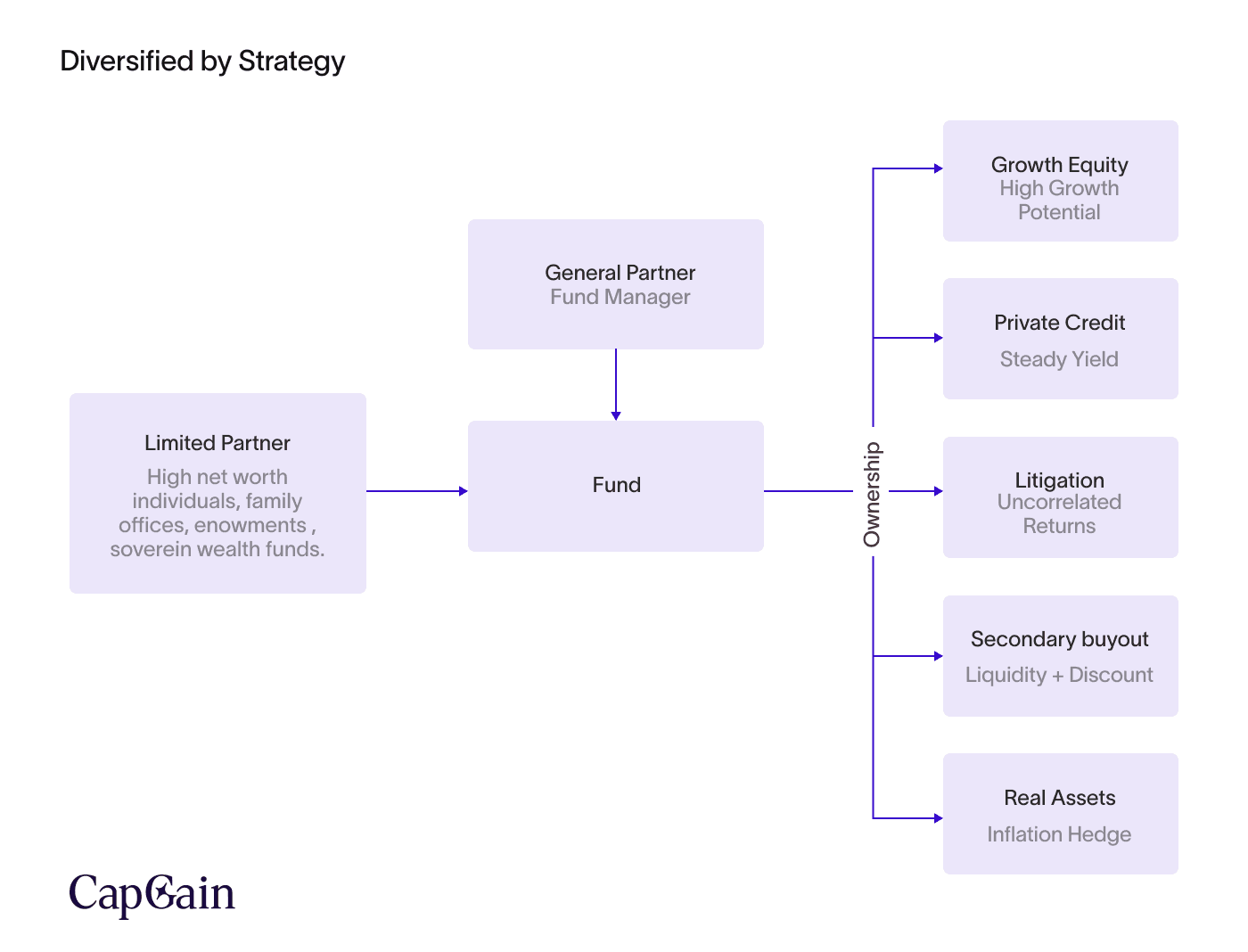
Another fund may blend different investment strategies — from steady yield to opportunistic growth — balancing your exposure across the risk spectrum.
If you are already feeling a bit overwhelmed by the concepts introduced in this chapter, don’t worry. We do not expect you to understand everything all at once. This is a slow ascent. We’ll re-introduce the strategies mentioned in later modules.
But for now, let’s shift focus and explore how you can benefit from investing in private markets today.
Share this post


Private market fundamental