
What and how… and when?
What are private market investments? It dep
The universe of private companies is vast and varied, ranging significantly in their development, sector focus, and capital needs.
Consequently, private market investments are not a monolithic asset class; instead, it is defined by a spectrum of sub-categories within private market investing. These categories, more commonly referred to as investment strategies, have vastly different characteristics, return profiles, and risks.
If you are new to private market investing, understanding how the different types of investments work can feel daunting at first, but don’t worry: we get you, and we’ve got you.
In general, the three pillars of an investment strategy can be summarised as ‘what’, ‘how’, and – crucially – ‘when’.
· What underlying assets a fund will target
· How the manager generates returns through the acquisition and management of those assets
· How often are those returns realised and distributed
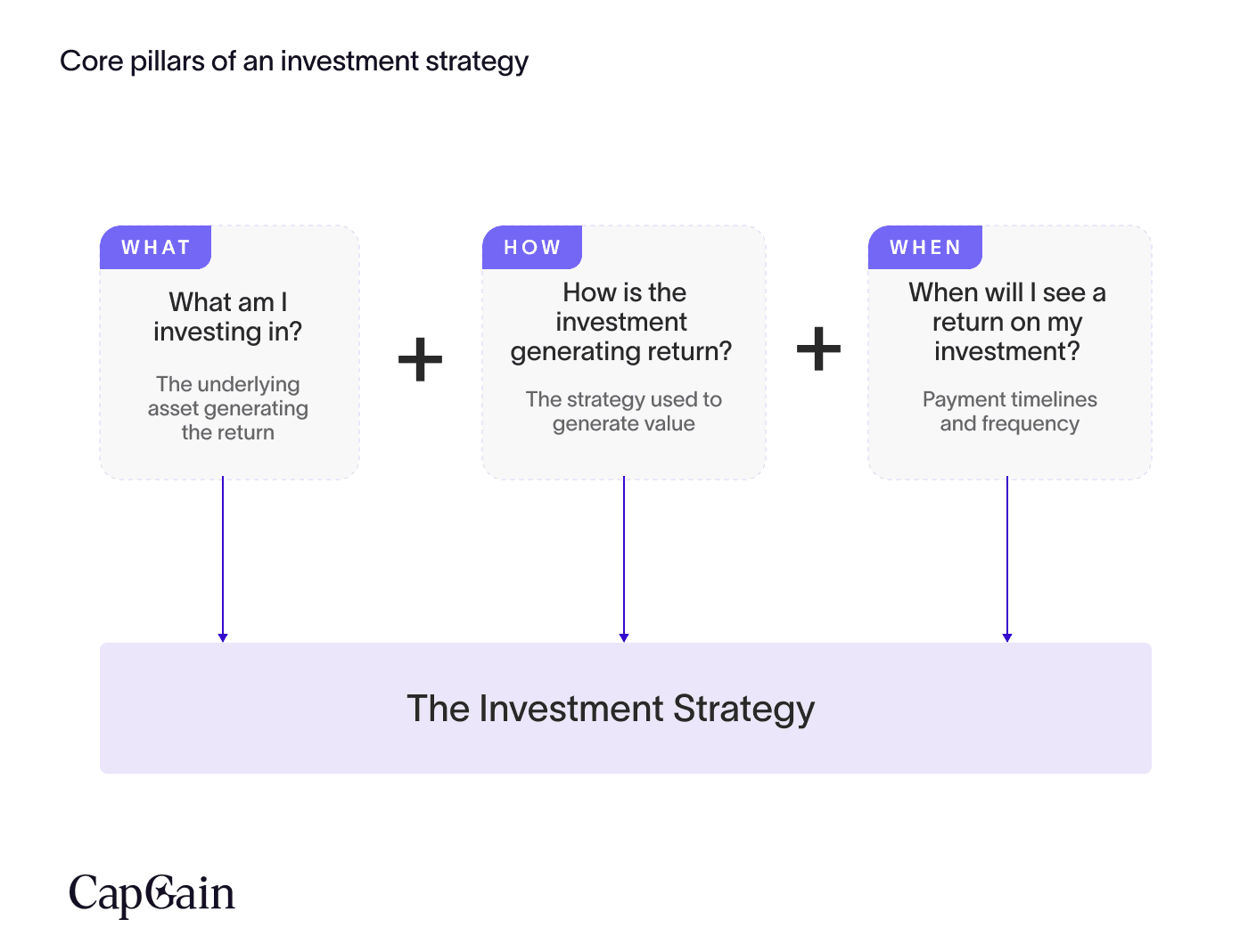
If you understand the essence of these pillars, you already have a good grasp on investment strategies. Let’s take an example: Within private markets, private equity is one, if not the most well-known, investment strategy. Here, the underlying asset – the what –is the portfolio company, i.e., the company that the private equity firm invests in. The private equity firm generates returns by increasing the value of the company and selling it at a profit. That’s ‘the how’ (don’t worry, we’ll explore exactly how in later modules). Finally, the private equity investors often receive payments at the end of the investment term, when the private equity company has sold or exited the investment. Again, we’ll dive into the timelines in later modules.
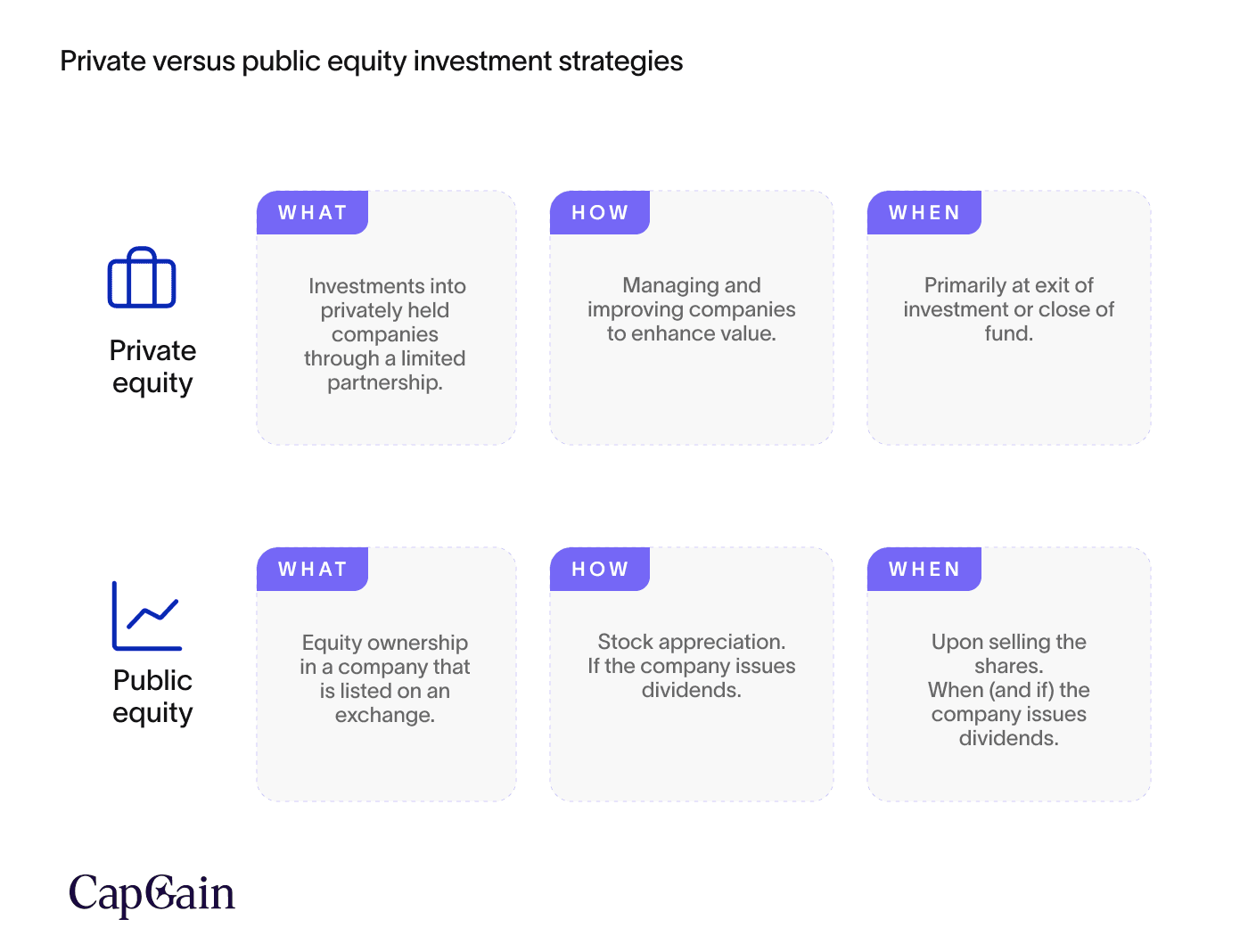
Still unclear? Let’s contrast this with public market investing. In this case, the asset you invest in is also typically a company, specifically, an equity stake. Your return is primarily generated through the appreciation of the stock price and the occasional dividend payment. This return is realized once you sell your shares on an exchange.
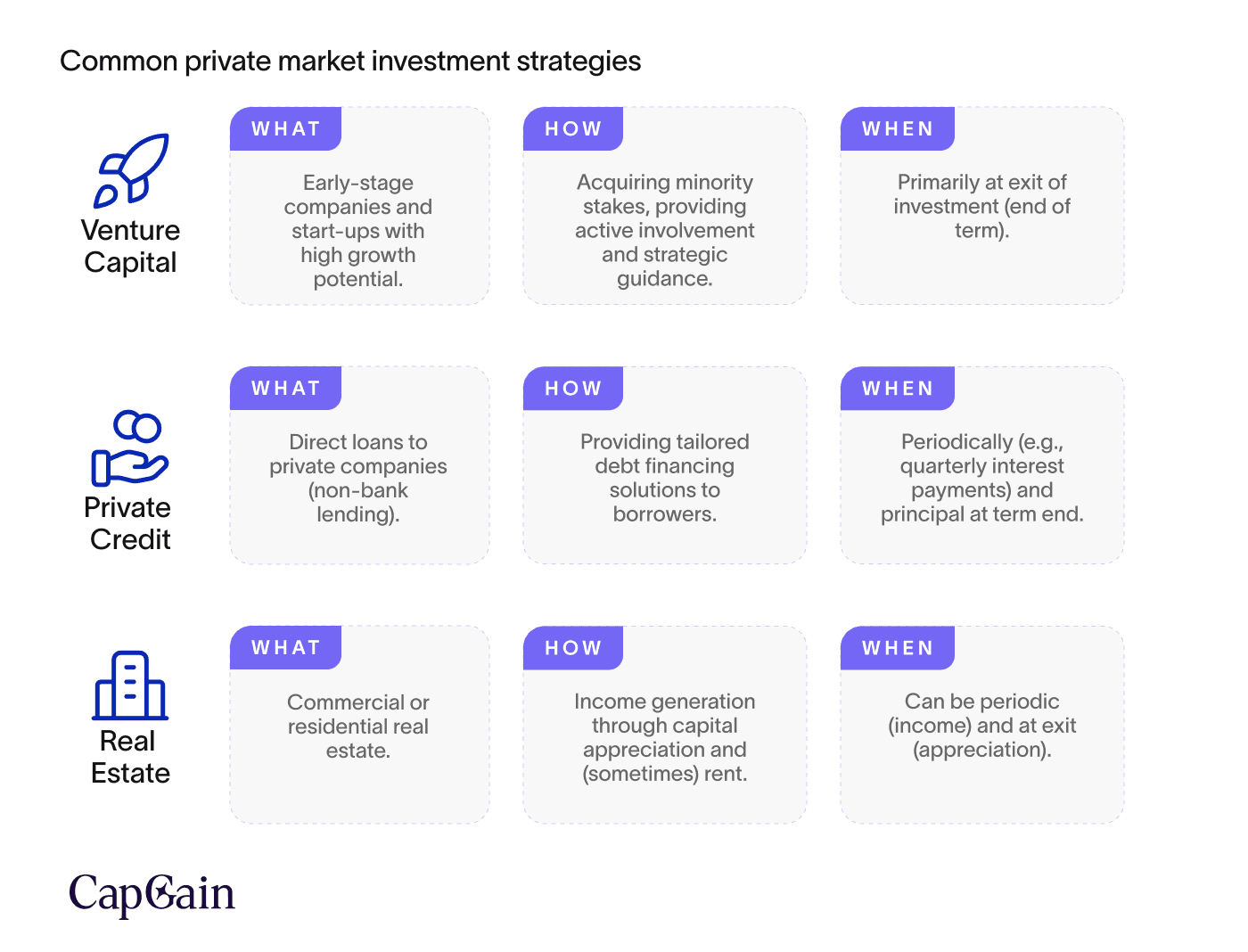
In the table below, you'll find a list of the most common investment strategies within private markets, along with a high-level overview of their "what," "how," and "when" characteristics. This framework will serve as a key learning anchor in your understanding of private markets and hopefully guide you while deciding which investments are right for you.
Share this post


Private market fundamental