
Introduction to private markets
For decades, individual investors have relied on the trinity of traditional investments – public equities, fixed income, and cash – to preserve wealth and generate returns. These traditional assets – perpetually in the public eye – have shaped our general understanding of investments and what it means to invest.
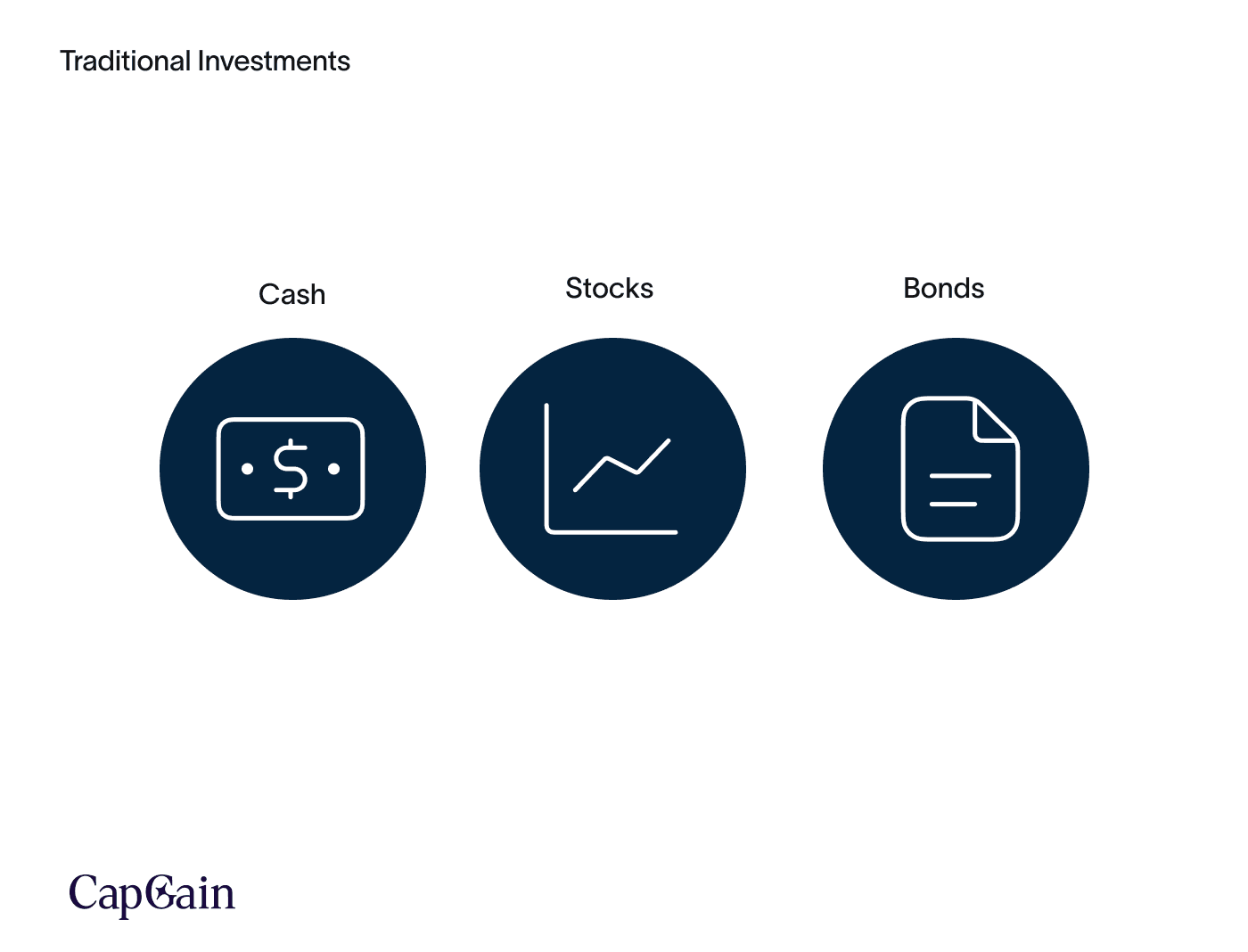
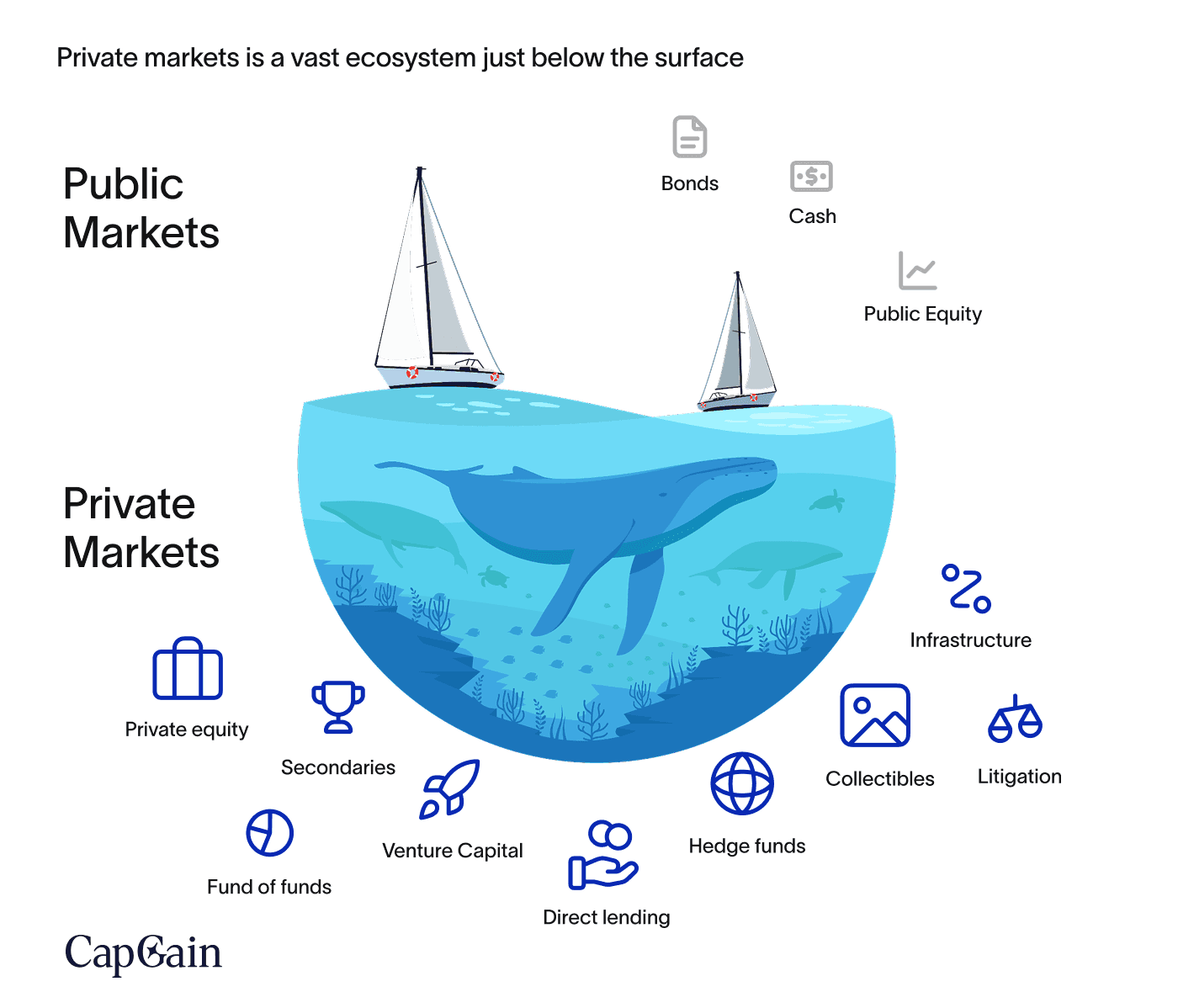
Yet, right beneath the surface lies a parallel, increasingly dominant universe: alternative investments.
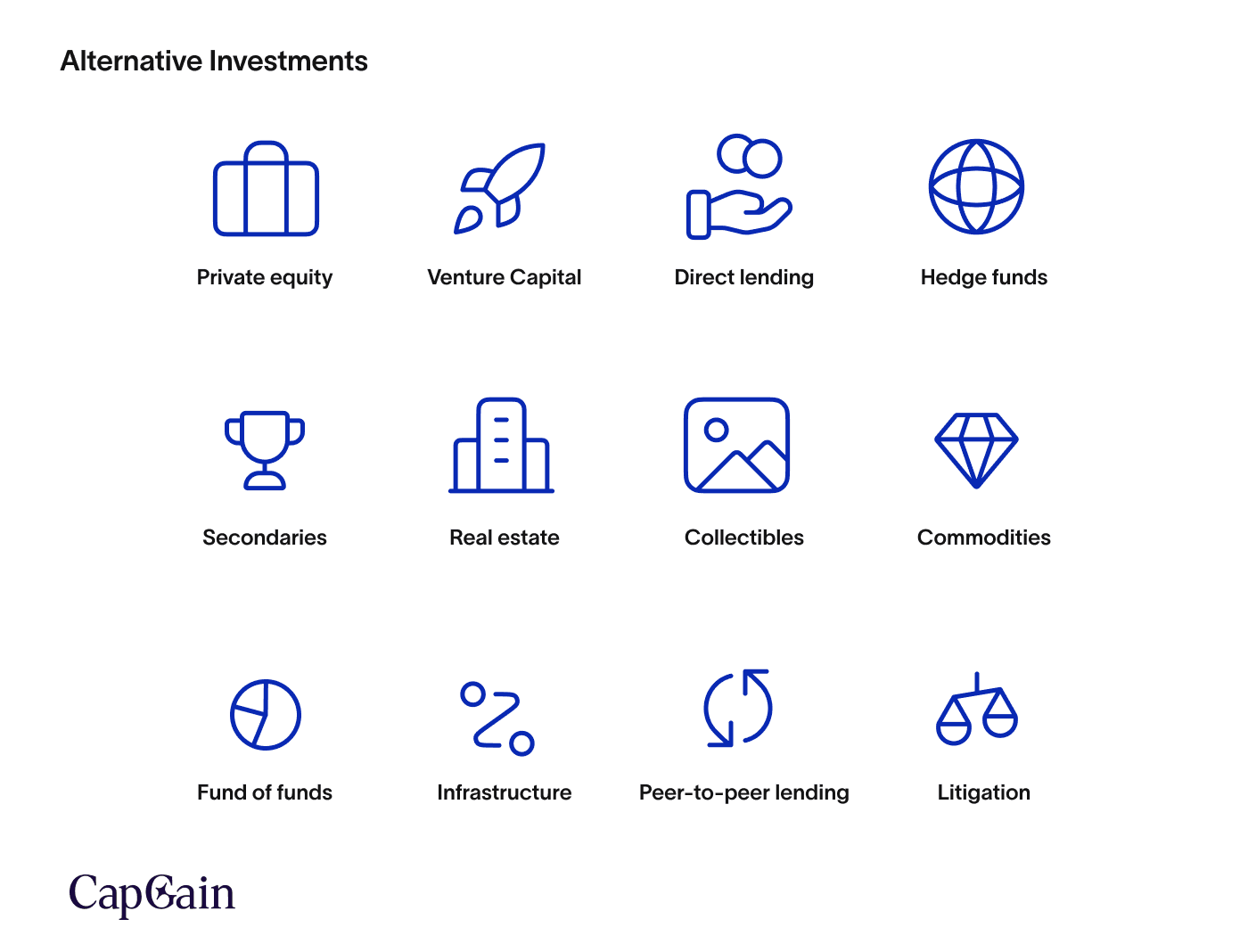
This category includes a wide range of investment opportunities with various risk-return profiles: from the high-growth potential of private equity and venture capital to the predictability of private credit and the strategic diversification offered by niche strategies such as litigation. The alternative landscape offers a distinct value proposition, becoming an increasingly instrumental asset class in the modern portfolio.
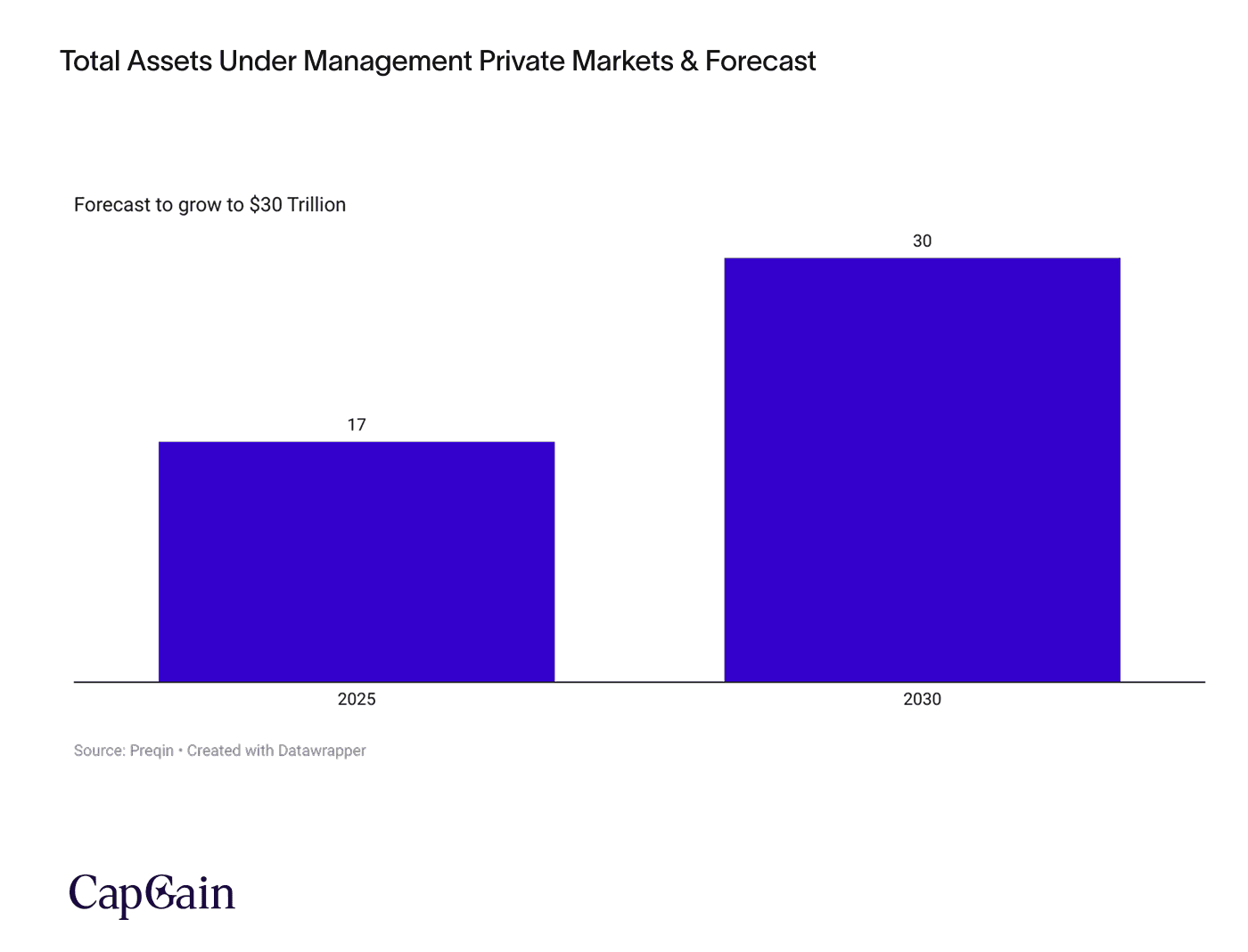
The sheer size and sustained growth of private markets underscore their significance. According to Prequin, this segment is currently estimated to represent $17 trillion in assets under management (AUM) globally as of 2024. These funds are managed and channeled through a sophisticated network of over 30,000 active asset managers and close to 70,000 private capital funds [1].
Moreover, projections by Preqin indicate that the market for alternative investments is poised for further growth: by 2030, the global private AUM is expected to exceed $30 trillion [1].
Another key indicator of this market's importance is the proportion of private enterprises: 87% of US companies and 96% of European companies with revenues exceeding $100 million continue to operate outside public exchanges [2][3].
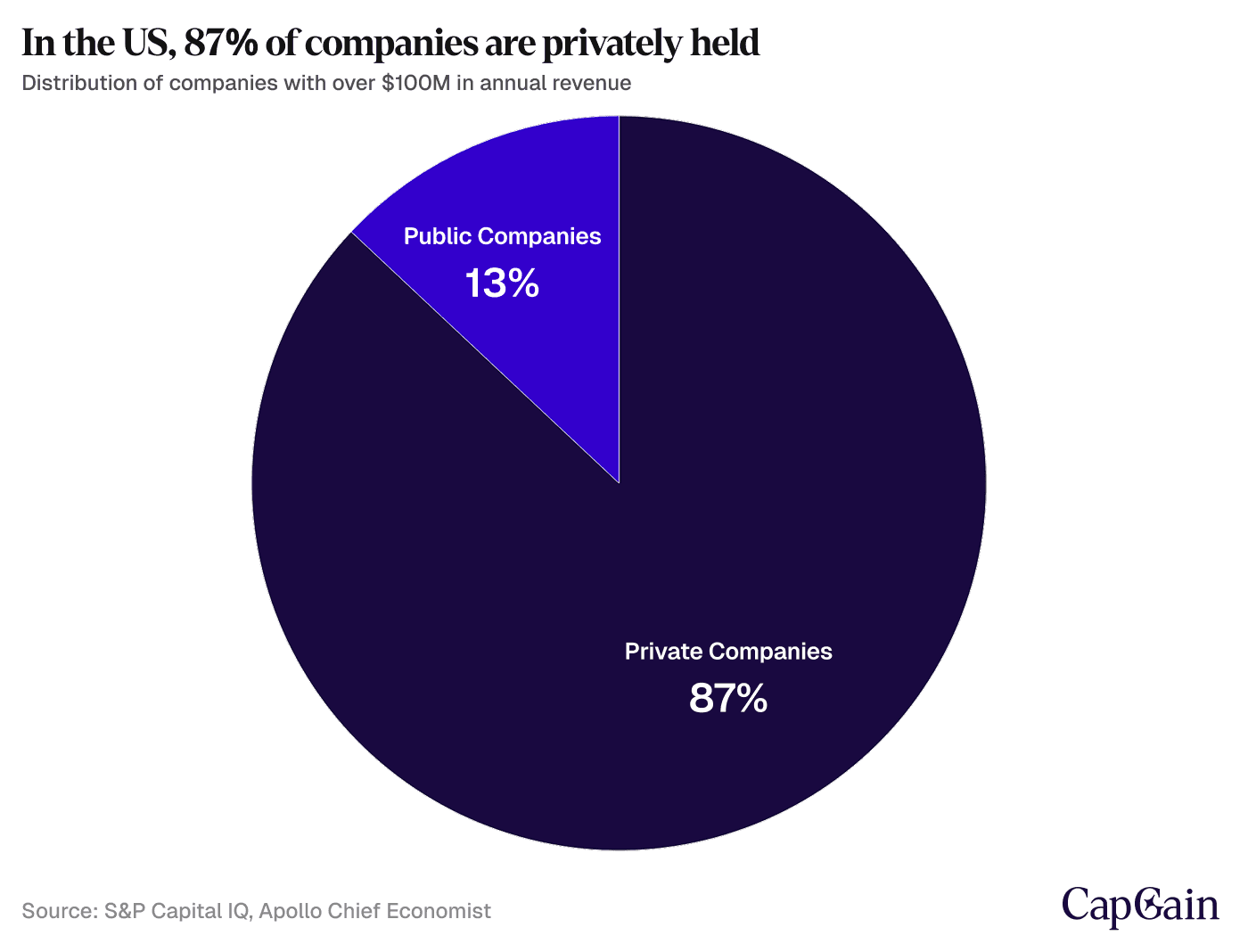
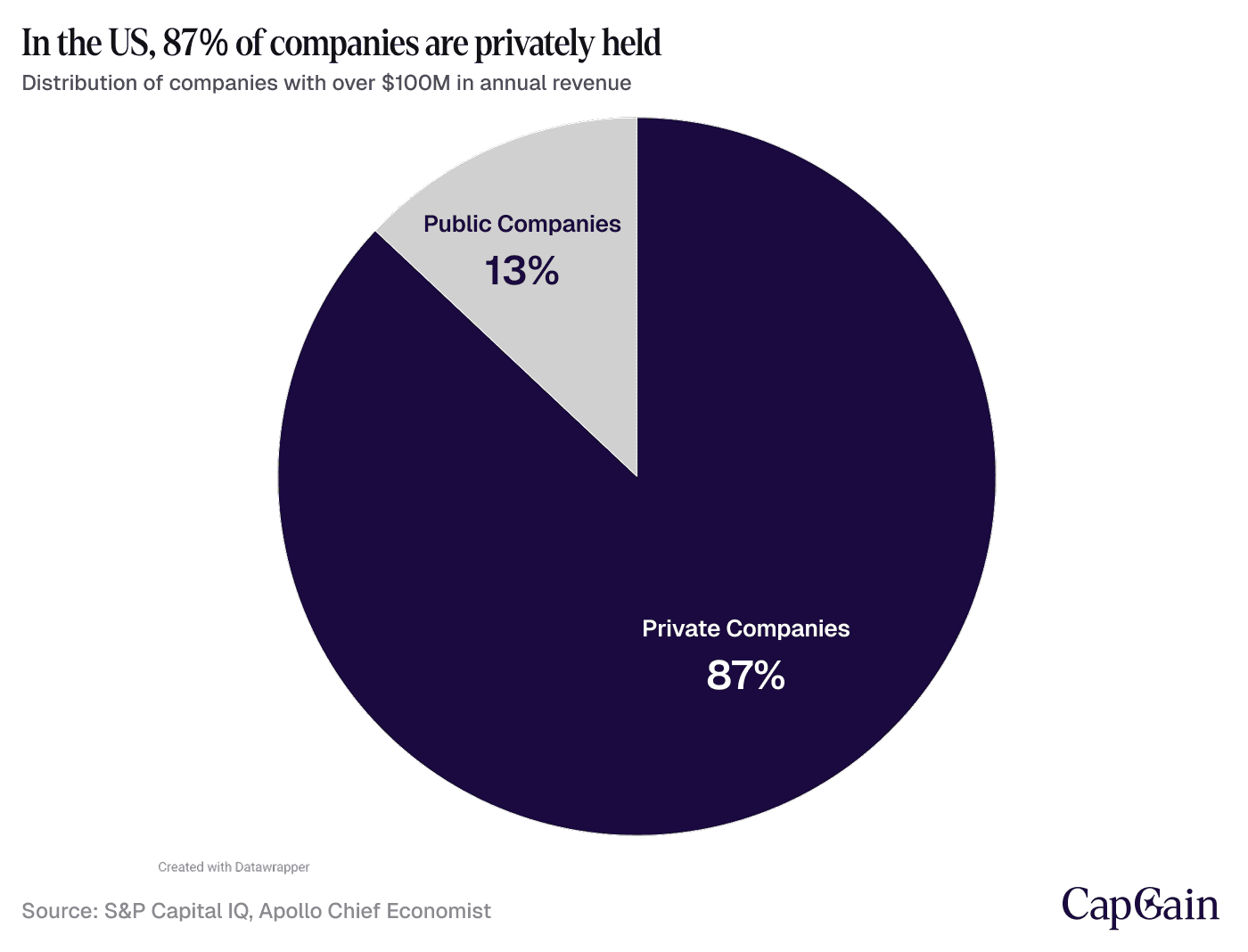
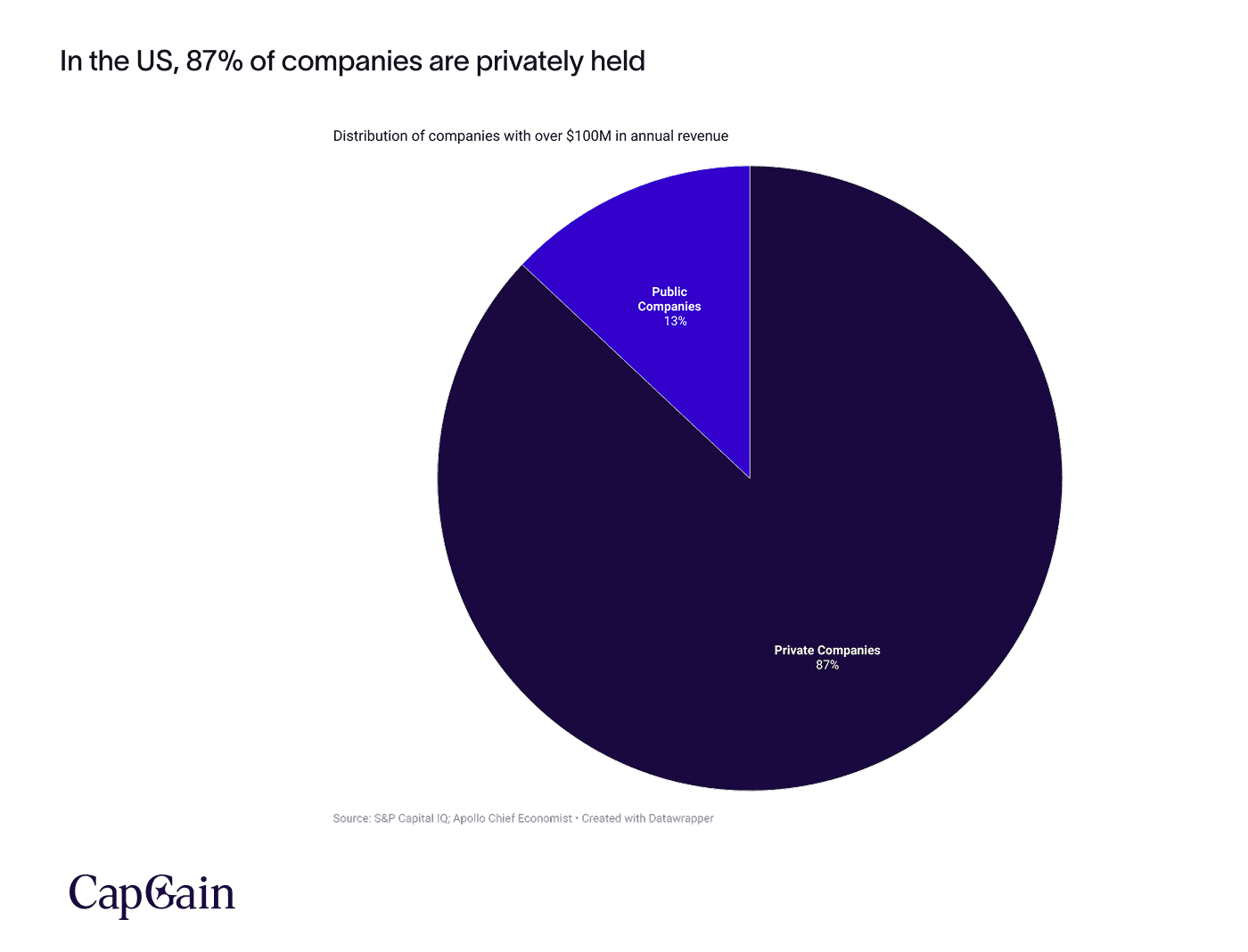
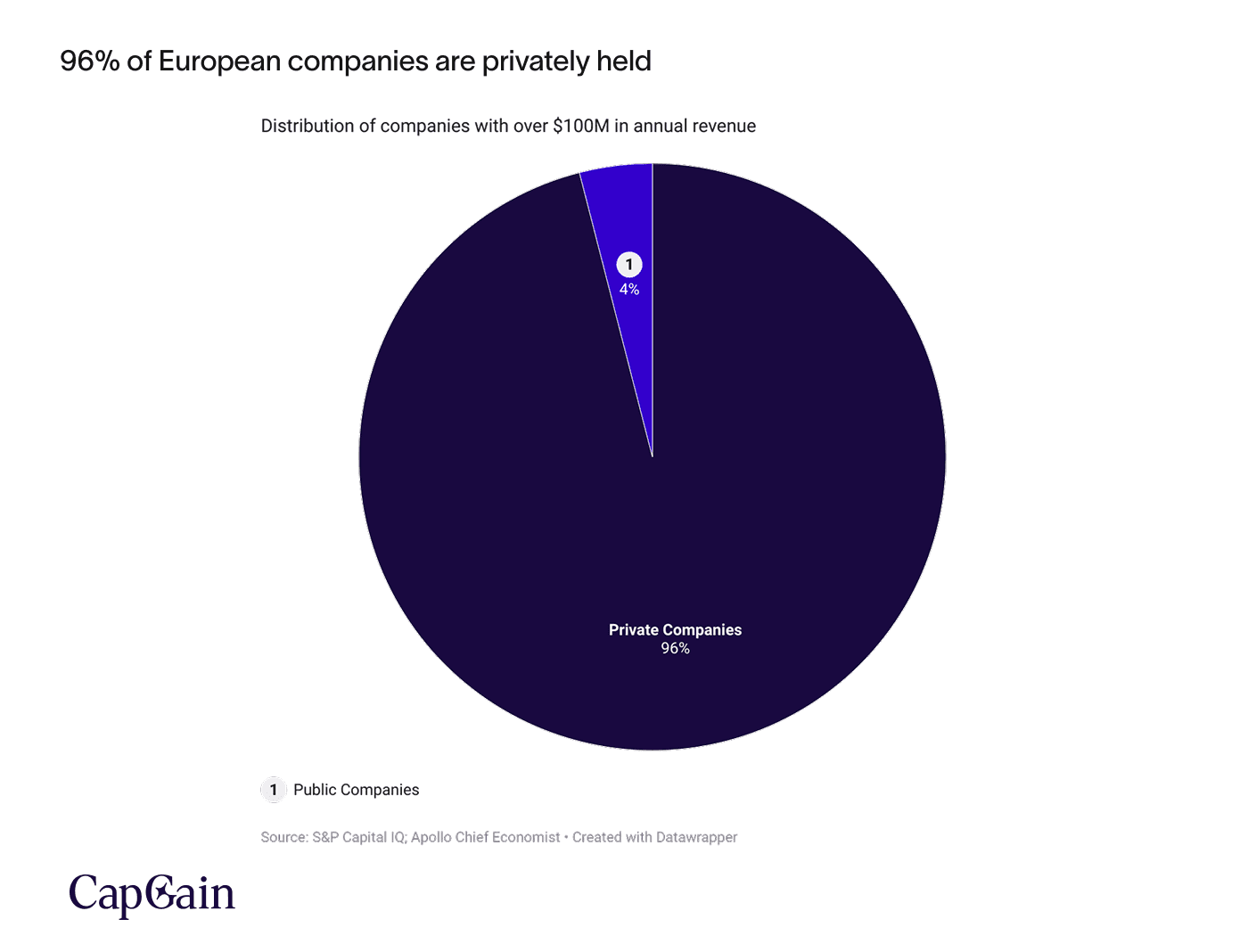
Since most investment portfolios comprise only public stocks, the average investor remains significantly underexposed to a vast segment of the global economy, and – perhaps more importantly- overexposed to stock market fluctuations.
From this perspective, traditional investments are just the tip of the iceberg. Beneath the surface lies a deep, complex, and increasingly essential layer of the global capital ecosystem.
For investors seeking to enhance portfolio performance and achieve strategic diversification, gaining access to these private market opportunities is a strategic imperative.
In today's dynamic investment landscape, this access is increasingly crucial. As global markets evolve and traditional asset classes face new pressures, the ability to tap into diversified growth engines becomes paramount. Private markets offer a vital channel to achieve this, providing pathways to innovation and value creation that are essential for a robust, future-proofed portfolio.
In this context, CapGain is positioned as a key facilitator. By democratising and demystifying private markets, our mission is to bridge the gap between investors and the exciting opportunities that private markets represent.
Footnotes
[1] https://www.preqin.com/academy/lesson-1-alternative-assets/past-present-future-of-the-alternative-assets-industry
[2] https://www.apolloacademy.com/many-more-private-firms-in-the-us/
[3]https://www.apolloacademy.com/many-more-private-firms-in-europe/
Share this post


Private market fundamental